
How to Cure Concrete
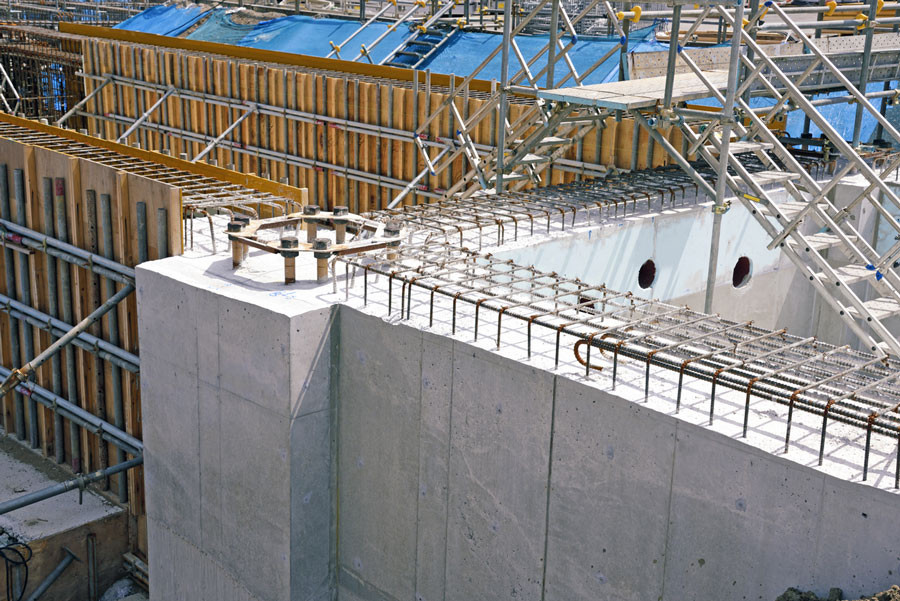
The concrete curing process is an important step in ensuring your concrete gains the desired strength. If concrete is not cured, its strength can be reduced by up to 40% and can result in surface cracking, curling and dusting. It is very important to cure the concrete immediately after finishing.
Here are some common ways to cure concrete to achieve a strong, lasting result.
What Is Concrete Curing?
Curing is the protection of fresh concrete from evaporation and temperature extremes, allowing it to set in a controlled way.
If concrete is to gain its ultimate strength and durability, it’s critical that its hydration and temperature are kept as constant as possible. The concrete needs sufficient moisture available and a moderate temperature in order to cure at the rate intended by the manufacturer.
The moisture necessary for curing can be provided by simple water, or by the addition of a concrete curing compound such as the Aftek Curecon range.
Why Does Concrete Need To Be Cured?
Without curing, moisture is lost too quickly and there isn't enough water necessary for the concrete crystals to grow.
Although concrete will dry naturally over time, curing it properly will ensure it does not dry too fast. When water evaporates too quickly from the drying concrete, the mixture will form bonds too quickly, or conversely, if it’s very cold and damp the mixture will bond very slowly. This can lead to the end result being weakened, low quality, and not as watertight.
Plus, if you’re laying concrete in a cold climate, the end product may not be as resistant to freeze and thaw cycles.
Concrete Curing Best Practice
As a rule of thumb concrete should be cured for 7 days up to 28 days. During that time it should be kept wet and as near as possible to the ideal temperature of 23 degrees Celcius.
The strength of the concrete will increase as it ages under optimum curing conditions. Additionally, the compressive strength of properly cured concrete is generally much greater than that of uncured concrete. The key advantages of properly cured concrete are:
- It is stronger and more durable
- It is less prone to shrinkage and cracking
- It is more likely to be watertight
How To Cure Concrete With Water
Curing concrete with water prevents excessive moisture loss as the concrete dries. By ‘ponding’ or allowing a layer of water to sit on the surface of the concrete, the evaporation rate will be controlled.
Using mists of water is also common practice, as spraying a fine mist of water across the surface of the concrete maintains its moisture levels.
Wet Curing With Plastic Or Hessian
Perhaps most common is wet curing, where a covering of hessian or similar breathable material is kept damp whilst the concrete hardens. Plastic sheeting is also used for curing, as the thin plastic membrane helps retard the evaporation of water from concrete.
Plastic sheeting and fabrics such as hessian are also flexible and are therefore able to be draped over irregularly shaped surfaces.
Concrete Curing Compounds
Curing compounds are chemicals that are specially developed to form an impermeable membrane that slows moisture loss. They can be water based, resin or PVA based and are often broken into types of classes.
Type 1 is a translucent fluid, Type 1 D is a translucent fluid with the addition of a special dye, and Type 2 is generally white pigmented.
The dye enables identification of areas that are not evenly covered which is particularly important when applying the curing compound using a sprayer. The concrete needs to be uniformly covered, and the ‘fugitive’ dye outlines areas that need more attention.
White compounds are able to reflect the sun thereby reducing heat absorption and drying of the concrete.
In addition to the Type, they are broken into Class A which are typically wax based materials, and Class B which are hydrocarbon or resin based. Class D cures are synthetic polymers, whilst Class Z encompasses all other types.
How To Choose A Concrete Curing Compound
It’s critical to follow the specifications for your project and the manufacturer’s instructions when it comes to concrete curing compounds. However, if you need assistance with product selection, Jaybro’s specialist concrete chemicals team can assist.
Give our friendly team a call on 1300 788 476.
Recent Posts
-

Custom Embroidery & Branded Workwear
At Jaybro, we make it easy to customise your hi-vis workwear with professional embroidery and screen... read more -

Jaybro now offer installation services for vinyl mesh in Sydney!
In today's fast-paced world, maintaining a professional image is crucial for businesses and this inc... read more -

Buyers Guide: Temporary floor protection
Floor protection products include rolls of disposable plastic film or cardboard that are used b... read more -
How to use a banding tool
A banding tool securely fastens metallic or plastic strapping around objects that need to be held to... read more